
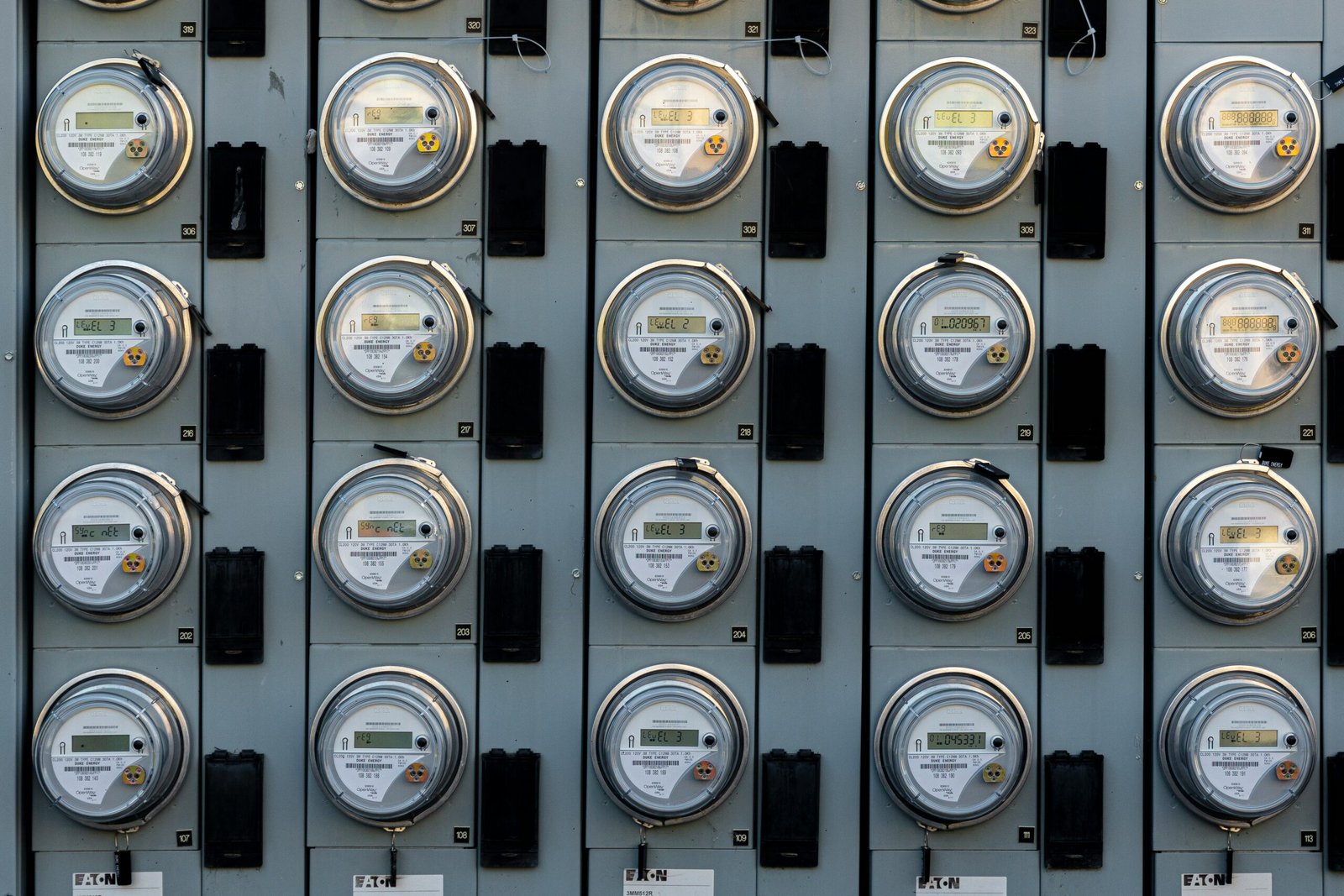
California edition · Regulatory review September 5, 2026. This guide applies to homeowners planning an ADU in Pacific Gas and Electric Company (PG&E) service territory. PG&E determines the project-specific service configuration, engineering scope and utility charges.
Homeowners often ask one question—“How much will the PG&E meter cost?”—when the real utility budget depends on several separate decisions: whether the ADU needs individual metering, whether the existing service has enough capacity, whether the work is overhead or underground, and whether PG&E must modify only the service or also the surrounding distribution system.
The practical goal is to identify the physical utility scope before you lock the ADU construction budget. This guide shows what can be screened early, what PG&E must confirm, and how to keep trenching, panel work and utility-company charges from disappearing inside one vague allowance.
The quick answer
A JADU has a specific PG&E Rule 18 exception: it does not require a separate electric meter or separate address for this tariff purpose. A full ADU should be reviewed by PG&E for its approved meter and service arrangement. A second meter does not automatically mean a second transformer or a completely independent service all the way to the street.
1. Does a California ADU need a separate PG&E meter?
PG&E Electric Rule 18 generally provides individual metering for residential dwelling units. The same tariff specifically states that a Junior Accessory Dwelling Unit (JADU) is not considered a residential dwelling unit for this separate-meter provision and does not require separate metering or a separate address.
| Project | Useful early planning assumption |
|---|---|
| JADU inside a single-family residence | Separate PG&E electric meter is not required under Rule 18. |
| New detached full ADU | Plan for PG&E review of the individual meter and service arrangement. |
| Attached full ADU | Ask PG&E how the final approved dwelling will be metered before the electrical design is locked. |
| Garage or interior conversion to a full ADU | Do not assume the existing shared meter automatically remains acceptable; confirm the approved arrangement. |
| Existing permitted ADU with an established service | Have PG&E review the existing condition before redesigning it based on generic online advice. |
Read the current PG&E Electric Rule 18. California HCD utility-connection protections and PG&E electric metering rules answer different questions, so do not treat one as a substitute for the other.
For the structural, sanitation, rental and owner-occupancy rules that determine whether your project is a JADU or full ADU, see our JADU vs ADU California requirements guide.
2. A separate meter and a new utility service are not the same thing
EXISTING INFRASTRUCTURE WORKS
The ADU adds load, but PG&E determines the existing service and distribution system can support it. Your electrician may still need new panels, feeders or breakers.
SERVICE MODIFICATION
PG&E may need to change service conductors, meter arrangements or related equipment because of the added load or additional meter.
UNDERGROUND EXTENSION
The project may add trenching, conduit, substructures, inspection and restoration work before PG&E installs or energizes its facilities.
DISTRIBUTION WORK
If the neighborhood distribution system itself must be extended or modified, ordinary ADU service-cost averages become a poor budgeting guide.
Ask PG&E two separate questions: “Does this ADU require individual metering?” and “What service or distribution work is required to supply that meter?”
3. What does PG&E actually report for new ADU service?
PG&E publishes residential-service cost information under California SB 1210. Its reported averages are useful because they are based on completed utility projects rather than a contractor guess. They are still not a quote for your parcel.
| New Rule 16 service to an ADU | Average invoiced cost | Average total project time |
|---|---|---|
| Electric | $4,831.86 | 303 days |
| Gas | $16,865.29 | 277 days |
Do not enter $4,831.86 into your calculator as a guaranteed PG&E cost. PG&E says project costs vary with scope, service distance, site environment, service availability, allowances, refunds, discounts and other conditions. Its published ADU averages also exclude projects involving Rule 15 distribution or mainline extensions.
Source: PG&E SB 1210 Residential Service Cost & Timeline Disclosure.
4. Separate the utility budget into six cost buckets
One “utilities” allowance hides too much. Track each scope separately so you know which number comes from PG&E, which comes from your electrician, and which remains unresolved.
PG&E ENGINEERING / UTILITY WORK
Load review, service point, meter configuration and utility-side design. An Engineering Advance may apply before detailed design.
PANEL / CUSTOMER ELECTRICAL
Main panel, subpanel, feeders, breakers, load management and electrician labor. This is not automatically included in PG&E’s invoice.
TRENCHING / CONDUIT
Underground route, excavation, conduit, permit costs and restoration. PG&E states customers are responsible for trenching and permit costs for underground-service work.
TRANSFORMER / SERVICE EQUIPMENT
PG&E may determine that transformer, metering or conductor work is needed. Responsibility depends on the approved scope and tariff.
RULE 15 DISTRIBUTION WORK
Distribution or mainline work is different from ordinary Rule 16 service work and is excluded from PG&E’s published ADU averages.
GAS SERVICE
A second gas meter introduces separate address, BTU-load, inspection and utility-design requirements. Decide whether the ADU actually needs gas before adding the scope.
5. Underground service can change the budget quickly
PG&E’s residential project guidance says customers are responsible for trenching and permit costs associated with underground-service work. The cost therefore depends heavily on the actual route: a short trench through soil is very different from a long route through concrete, rock, retaining walls or public right-of-way.
Measure the likely utility route in feet. Record what the trench crosses, who restores those surfaces, and whether the route conflicts with drainage, trees, other utilities or structures. Do not estimate trenching from ADU square footage.
See PG&E Residential Project Resources and the current 2026 PG&E Greenbook resources.
What customer-installed Rule 16 work may look like
For underground service, the PG&E design—not a generic internet list—controls the trench, conduit and substructure details. Depending on the approved design, customer-side work can include:
- excavating the approved trench route and providing suitable backfill;
- installing the conduit and any required customer-installed substructures shown on the utility design;
- making the conduit available for PG&E visual inspection and required mandrel testing;
- obtaining applicable permits and completing local city or county inspections; and
- restoring paving, landscaping or other surfaces disturbed by the work when that scope belongs to the customer.
Do not buy conduit from a generic “Rule 16 materials list.” PG&E uses project-specific design standards for conduit size, material, depth, bends and clearances. The 2026 Greenbook should be read together with the design issued for your property.
6. Does the main electrical panel need to be upgraded?
A new ADU can add significant electrical load from HVAC, water heating, cooking, laundry and other equipment. An EV charger, existing solar/battery system or planned electrification of the main house can change the calculation again.
Do not use the amp number printed on the existing panel as the only feasibility test. Have the electrical designer or contractor prepare the applicable load calculation and ask PG&E whether the utility-side service can support the proposed load.
PG&E’s PanelBoost guidance uses a typical full electrical-panel-upgrade range of roughly $3,000–$8,000 for an overhead-service home as a general home-electrification benchmark. That is not an ADU utility quote, but it helps explain why customer-side electrical work should be budgeted separately from the PG&E contract.
Could PG&E PanelBoost help avoid a panel upgrade?
PG&E PanelBoost is a home-electrification program designed to help some eligible single-family residential customers add high-demand electric appliances without a traditional panel or service upgrade. PG&E currently directs interested customers to a waitlist.
PG&E says potential candidates generally include active residential electric customers who own a single-family home, have a 150-amp-or-smaller service, want to add equipment such as a heat pump or EV charger, and have been told by a licensed electrician that a panel or service upgrade may otherwise be needed. Qualified participants receive the PanelBoost hardware at no cost, while the customer remains responsible for the electrician’s installation fees, permits and appliance connections.
Do not budget PanelBoost as an ADU rebate. PG&E does not present the program as an ADU-specific incentive. If your ADU is also driving broader home electrification or a service-capacity problem, ask PG&E whether your particular property and equipment plan is eligible before assuming it will avoid an upgrade.
7. Confirm the meter location before the exterior design is final
PG&E has access and working-clearance requirements for meter equipment. Current residential guidance for underground-service meter panels includes exterior accessibility, required working space and defined mounting heights. Gas and electric separation requirements can also affect where equipment can sit.
A meter location that works on an architectural elevation can fail utility requirements because of a fence, window, gas equipment, walkway or restricted access. Have the electrician and PG&E confirm the proposed location before treating the exterior layout as final.
8. Should the ADU have a second PG&E gas meter?
PG&E requires project-specific information for added gas meters, including the exact ADU address, permit and inspection information, and appliance BTU loads. Multi-unit meters may also need to be grouped in an accessible location.
The SB 1210 dataset reported a much higher average invoiced cost for new Rule 16 gas service to ADUs than for electric service. That makes it worth evaluating an all-electric ADU before automatically adding gas. An all-electric design is not automatically cheaper overall; the added electric load still has to fit the electrical-service strategy.
9. Why PG&E’s ADU service data shows a 303-day average total timeline
PG&E’s SB 1210 disclosure does not say that every ADU waits 303 days for PG&E. It reports a 303-day average total project timeline for completed new Rule 16 electric-service projects in the ADU category.
| Responsibility measure reported by PG&E | Average days |
|---|---|
| PG&E | 111 |
| Customer | 114 |
| Agencies | 28 |
| Total project | 303 |
PG&E reports those responsibility-day averages separately alongside the total, so they should not be treated as a simple arithmetic reconstruction of the 303 days. The useful lesson is that utility schedules can be delayed by more than utility construction alone: incomplete customer documents, design changes, unpaid contracts, trench readiness and local inspection/release timing can all affect when the service is energized.
Planning move: start the PG&E application once the electrical concept and expected load are sufficiently defined, then track the PG&E action, customer action and agency action separately in the utility decision worksheet below.
10. Ask PG&E these 10 questions before fixing the budget
- Does PG&E consider this ADU configuration an individually metered residential dwelling unit?
- Can the existing service support the calculated ADU load?
- Can both meters use the existing service arrangement, or is a new service required?
- Is this project Rule 16 service work only?
- Will any Rule 15 distribution work be required?
- Does the serving transformer have sufficient capacity?
- What trenching, conduit, substructures or restoration are my responsibility?
- Does the proposed meter location meet current PG&E requirements?
- What Engineering Advance and contract payments should I expect?
- What must be complete before PG&E will energize the ADU meter?
PG&E utility decision worksheet
Use this as a running project record after your first electrical review. Its purpose is to tell you which utility path is being designed, what is confirmed, what is still unknown, who owns each cost, and what must happen next.
A. Project & existing service
B. PG&E service decisions
C. Physical work on the property
D. Cost responsibility register
Enter an amount only from a written quote, PG&E invoice/contract, or an intentional planning allowance. Keep the status visible.
| Cost bucket | Responsible party | Status | Amount |
|---|---|---|---|
| PG&E Engineering Advance | |||
| PG&E service contract / utility charge | |||
| Electrician / panel / customer electrical | |||
| Trench / conduit / substructures | |||
| Permits / pavement / landscape restoration | |||
| Gas service, if used |
E. Schedule & next action
One-page decision summary
The bottom line
The most useful question is not “How much does a PG&E meter cost?” It is:
What physical and tariff work does PG&E need to perform on this property to serve the ADU?
Work through the sequence: existing service works → service modification → second meter/service → underground trench → possible distribution work. Then carry each confirmed cost into the ADU budget separately.
Primary sources and limitations
- PG&E Electric Rule 18 — residential metering and JADU exception
- PG&E SB 1210 — residential service cost and timeline disclosure
- PG&E — residential project resources
- PG&E — 2026 Electric and Gas Service Requirements (Greenbook)
- PG&E — application and pre-application resources
- California HCD — ADU Handbook, updated March 2026
Method: PG&E tariff and project guidance plus California HCD were reviewed for this planning guide. PG&E determines the project-specific service configuration and utility charges. ADU Project Planner is an independent educational resource and is not PG&E, a utility consultant, electrician, engineer or permitting agency. Featured photo: Jon Moore via Unsplash.